
Work, Not Welfare: Critical Rural Social Work Practice and the History of the Work Placement Scheme
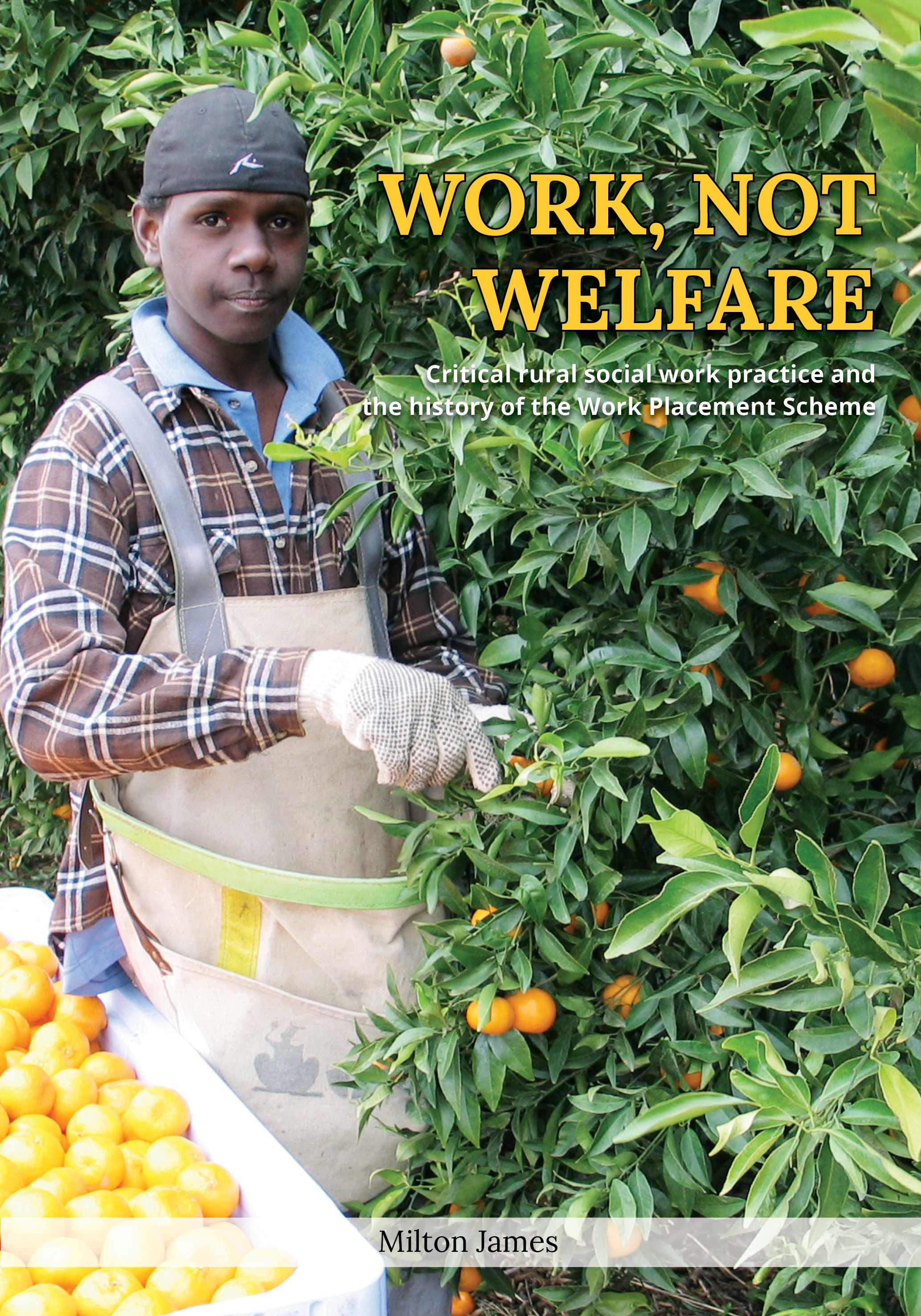
Work, Not Welfare: Critical Rural Social Work Practice and the History of the Work Placement Scheme
Milton James
$65.00 AUD
Including postage within Australia
About This Book
Work, Not Welfare documents the development of the Work Placement Scheme (WPS), an employment initiative established in 2005 to move disadvantaged young Indigenous people from remote northern Australian settlements directly into mainstream private-sector employment in southern Australia. Beginning with a trial in fruit picking and later expanding into meat processing and other industries, the scheme challenged the assumption that young Indigenous people were unwilling or unable to leave their home for work. The results showed that, with appropriate practical support and supervision, many could successfully make that transition: the horticultural scheme achieved 74% retention over seven months, while the meat-processing placements achieved 68% retention over twelve months. The central proposition emerging from the experience was simple: "start young and the best training for a real job is a real job."
Structured around developmental notes written as the WPS evolved, the book is also a critique of conventional welfare and employment-service approaches. It argues that employment itself can function as a powerful social intervention by placing young people in environments where responsibility, punctuality, self-reliance and consequences are ordinary requirements rather than therapeutic objectives. The experience of the WPS suggested that success depended particularly upon carefully selected real employment, worker mobility away from dysfunctional environments, and intensive needs-based support and supervision—not simply training programs or welfare services delivered in participants' home settlements.